Web application development — United Kingdom
We build portals, calculators, and browser-based systems around a defined business workflow.
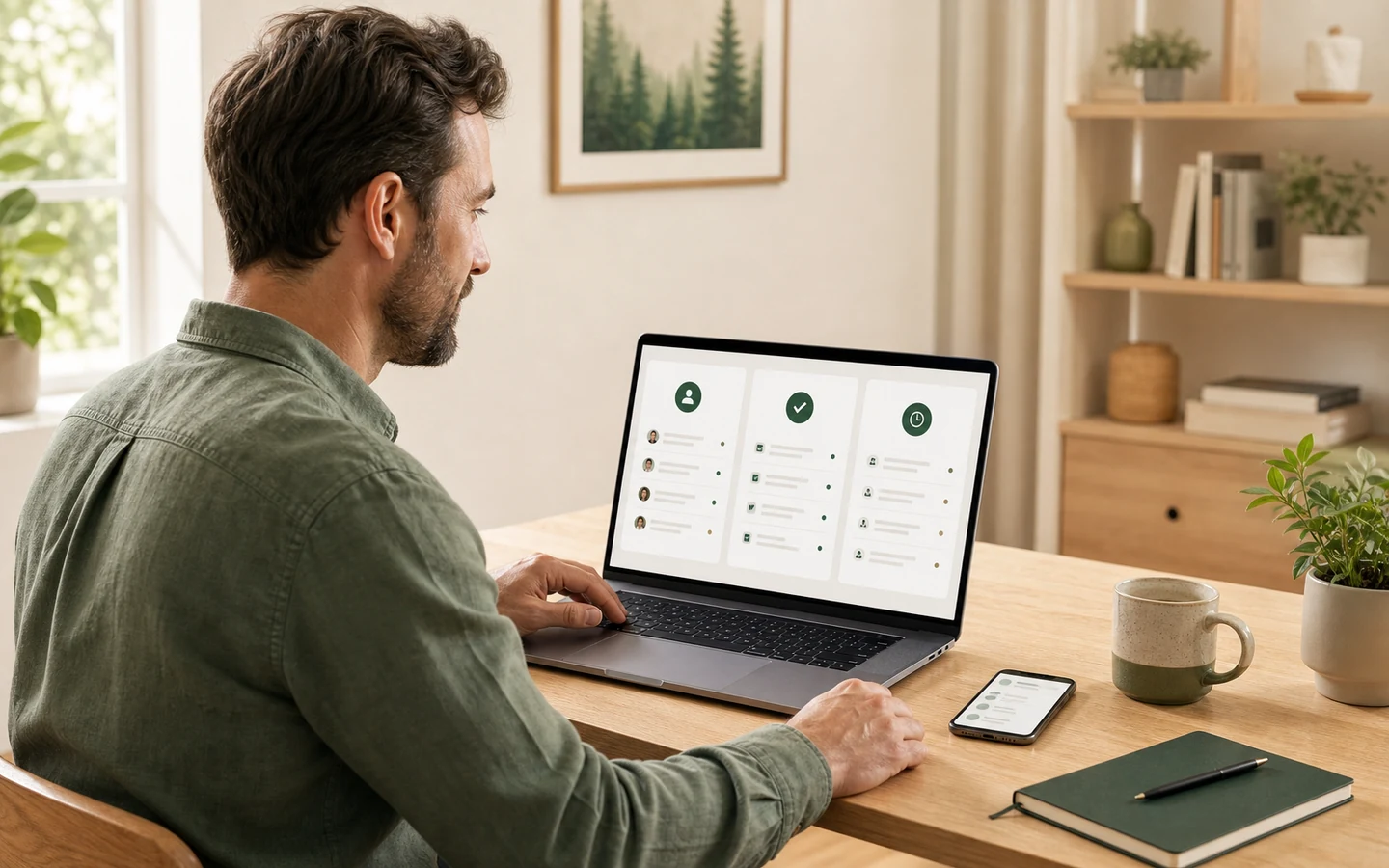
What's included in the work.
We define the scope before launch: result, boundaries, access, checks, and next steps.
Roles and Workflows
We determine who accesses the system, what they see, and which actions need to be faster or more reliable.
Prototype Before Major Development
We build a clickable path and test it with the owner and future users before implementing costly solutions.
Data, API, and Business Rules
We build the backend, access rights, integrations, and a log of important actions without logic hidden only in the browser.
Clients, employees, and partners
We separate environments and access rights so that one user cannot see data from another business or the internal admin panel.
Rates, Invoices, and Actual Usage
We connect the required calculation model and separate code verification, provider testing, and actual money movement.
Monitoring and Development
After launch, we monitor errors, speed, and user behavior, adding new features based on priority.
How the Project Progresses.
We move from a verifiable task to a working result, not from a list of technologies.
We define users, data, integrations, and the result of the first version.
We check the user journey and technical boundaries before main development.
We assemble the product in parts, checking roles, errors, security, and mobile display.
We deploy, observe real-world scenarios, and release subsequent improvements.
Related Services.
Discuss Web Application.
Tell us about your task and current status. We'll review the inputs, propose a useful first step, and honestly distinguish between what's essential and what can be postponed.
Frequently asked questions
How does a web application differ from a regular website?
A website primarily explains an offer and receives inquiries. A web application stores user state and data: account, orders, calculations, roles, documents, or workflow.
Can we start with a small first version?
Yes. We identify a minimum viable scenario that can be launched and tested without delaying the result until all future features are complete.
Who owns the code and data?
Rights, access, and source code transfer are stipulated in the contract. Client data is not used in other projects, and secrets are not embedded in public code.
Do you connect existing CRMs and services?
Yes, if they have an official API or another authorized integration method. Scope and access are agreed upon before development.